
Learn these 4 Knots Bends and Hitches before you head out for your adventure!
Surviving in the wilderness often depends on your ability to use simple tools effectively. One of the most essential skills is knowing how to tie the right knots, bends, and hitches. These techniques can secure shelter, fasten gear, or even save your life in emergencies. This guide covers five critical knots: the bowline, sheet bend, clove hitch, cow hitch, and their practical uses in outdoor survival.

Bowline knot: The lifesaver loop
The bowline knot is often called the “king of knots” because it creates a fixed loop that won’t slip or jam. It’s easy to tie and untie, even after bearing a heavy load. This knot is invaluable for rescue situations, such as pulling someone out of a dangerous spot or securing a rope around a tree to build shelter.
How to tie a bowline
Make a small loop in the rope, leaving enough tail.
Pass the tail end up through the loop.
Wrap the tail around the standing part of the rope.
Bring the tail back down through the loop.
Tighten the knot by pulling the standing part while holding the loop.
When to use the bowline
Creating a secure loop for climbing or rescue
Tying a rope around objects without slipping
Securing gear or tarps in camp
The bowline’s strength and reliability make it a must-know knot for anyone heading into the wild.
Sheet bend: Joining ropes of different sizes
When you need to connect two ropes, especially if they differ in thickness, the sheet bend is the best choice. Unlike some knots, it holds firmly under tension and is easy to untie.
How to tie a sheet bend
Form a bight (U-shaped bend) in the thicker rope.
Pass the thinner rope’s tail through the bight from underneath.
Wrap the thinner rope around both parts of the bight.
Tuck the tail under itself on the thinner rope side.
Pull both ropes to tighten.
Practical uses for the sheet bend
Extending rope length by joining two ropes
Repairing broken ropes in the field
Securing different types of cordage together
This knot is especially useful when your gear includes ropes of varying sizes or materials.

Clove hitch: Quick and adjustable fastening
The clove hitch is a simple knot that wraps around an object, such as a tree or pole. It’s quick to tie and adjust, making it ideal for temporary fastening. However, it can slip if not under constant tension.
How to tie a clove hitch
Wrap the rope around the object once.
Cross the rope over itself and wrap it around the object again.
Tuck the working end under the last wrap.
Pull tight to secure.
When to use the clove hitch
Attaching guy lines for tents or tarps
Securing ropes to poles or branches temporarily
Starting lashings for building shelters
Because it’s easy to adjust, the clove hitch is perfect for situations where you need to change tension or reposition your rope.
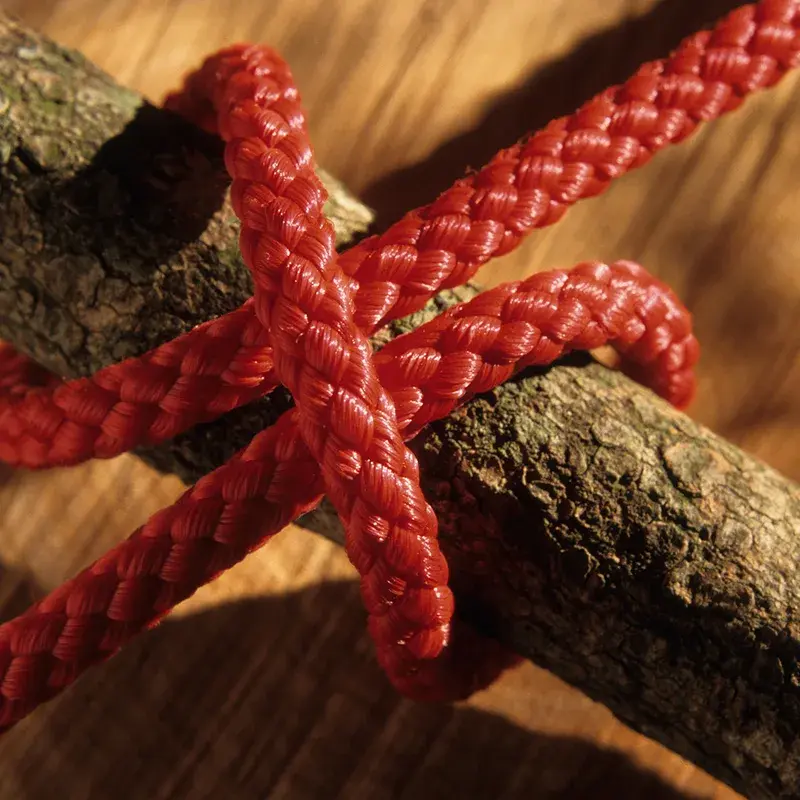
Taut Line : The adjustable hitch
The taut line knot is an adjustable knot commonly used to secure a line under tension. It is particularly useful in camping, sailing, and various outdoor activities where you need to create a taut line that can be easily adjusted.
How to tie a Taut Line hitch
Start with a Loop: Make a loop in the standing part of the rope where you want the knot to be. This is typically the part of the rope that will remain fixed.
Wrap the Working End: Take the working end of the rope and wrap it around the standing part and through the loop you just created.
Make Additional Wraps: Continue wrapping the working end around the standing part. Make two or three additional wraps, moving away from the loop.
Thread Through the Loop: After making the wraps, take the working end and thread it back through the loop you created in the first step.
Adjust the Knot: Pull on the standing part of the rope to tighten the knot. You can slide the knot along the standing part to adjust the tension as needed.
Applications of the Taut Line Hitch
Tent Guy Lines: Used to secure tent lines to the ground, allowing for easy adjustments to maintain tension.
Sailing: Useful for adjusting sail control lines, ensuring they remain taut while allowing for quick adjustments.
Outdoor Activities: Ideal for securing tarps or canopies, providing a stable and adjustable setup.
Climbing: Can be used in certain climbing scenarios to create adjustable anchors.
Mastering the taut line knot can greatly enhance your ability to manage tension in various outdoor and recreational activities.

Choosing the right knot for survival
Each knot has strengths and weaknesses. Knowing when and how to use them can make a big difference in survival situations:
Use the bowline for strong, fixed loops that won’t slip.
Use the sheet bend to join ropes, especially different sizes.
Use the clove hitch for quick, adjustable fastening to poles or trees.
Use the taut line for securing tents, or making anchors with an adjustable loop.
Practice tying these knots regularly. In the wilderness, muscle memory can save precious time and prevent mistakes.
Final Thoughts on Mastering Knots in the Wild
Mastering knots is an essential skill for anyone venturing into the wilderness. Here are some key points to consider:
Importance of Knot Knowledge
Knots provide security and stability in various outdoor activities.
They are crucial for setting up shelters, securing gear, and performing rescues.
Understanding different knots can enhance safety and efficiency.
Practice Makes Perfect
Regular practice is necessary to remember knot techniques.
Use different materials to become familiar with how knots behave under various conditions.
Practice in real-life scenarios to build confidence.
Choosing the Right Knot
Different situations require different knots; know which to use when.
Familiarize yourself with common knots like the bowline, clove hitch, and figure-eight.
Consider factors such as load, material, and purpose when selecting a knot.
Continuous Learning
Stay updated on new knot techniques and uses.
Join outdoor groups or workshops to learn from experienced individuals.
Share your knowledge and experiences with others to reinforce your skills.
Conclusion
Mastering knots is not just about learning a set of techniques; it's about enhancing your overall outdoor experience. With practice and knowledge, you can navigate the wild with confidence, ensuring safety in all your adventures.


Comments